Sunday, March 9, 2008

Paris, Monte Carlo, and a new semester

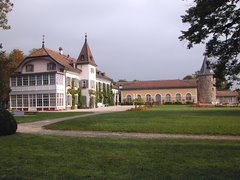
My first semester here at Bossey ended with a (badly needed) two-week break. About three-quarters of the students who’ve been here since September have left, having completed the five-month Graduate School program for which they registered. That leaves eight of us behind until the summer, completing master degrees in ecumenical studies. As you might imagine, the place is quite different with so many of our friends and colleagues now back in their home countries. But those of us left behind are managing, and certainly have enough academic work to keep us busy.

Notwithstanding academics, when I arrived in Switzerland I promised myself that I’d take advantage of the ease with which one can travel throughout Europe. Trains here are frequent, extensive, and reliable, and air travel is dirt cheap. So during my first week off I hopped on the TGV (France’s version of the high-speed train) and took a 300 km/h journey to Paris, where I met up with my ol’ buddy Stuart Greer, who’s now a London-based TV reporter. He’s been to Paris a bunch of times, and so was a great tour guide. We hit the usual spots: the Eiffel Tower, Champs d’Elysées, the Louvre, Notre-Dame Basilica, etc. I totally felt like a tourist, but it was good fun.

The following weekend it was off to the Mediterranean coast—Monaco, more specifically—where my erstwhile Quebec cathedral colleague Wally Raymond is now chaplain of St. Paul’s, the Church of England congregation in Monte Carlo. Since my visit included a Sunday, Wally invited me to preach. I was privileged to do so, and it was an extra treat because it was the first time I’d ever celebrated Mothering Sunday, which the Church of England still customarily observes on the fourth Sunday of Lent. A still further treat to my trip to the Riviera was the last-minute decision by my friends Christian Schreiner and Esperanza Rada (with whom, as you’ll recall below, I spent some of the Christmas holidays) to drive from Bavaria to join us. Wally, Christian and I were on all staff at the cathedral in Quebec for about six months in 2004, so it made for a nice reunion.

I realize that my choice and frequency of blog entries may leave the impression that I’m doing not much more over here than traipsing around Europe. I am, in fact, studying. (I’ve got my first semester transcripts if anyone would like proof!) Since those of us remaining for these final months are completing master degrees, the curriculum has kicked up some notches accordingly. The courses are of the seminar type, and include the themes of church and state, healing and reconciliation, inter-religious dialogue, and methodology—all from an ecumenical perspective, of course. The whole while, we’re also to be working on our 100-page dissertations. I’ll be finalizing a topic soon, and will keep you posted, should you be interested.

Monday, February 18, 2008

A week in the Eternal City

My first semester here ended with our entire class embarking on a week-long study trip to Rome, as guests of the Pontifical Council for Promoting Christian Unity.

We were put up in a guesthouse that looked down on St. Peter’s Square, and were guided through all of the sites you’d expect to see: St. Peter’s Basilica, the Sistine Chapel, the Vatican Museum, the Coliseum and other ancient Roman ruins, catacombs where the first persecuted Christians worshiped, and the list goes on.

At least as interesting was the opportunity to enter into discussion with members of the Roman Curia, particularly from the Pontifical Council for Promoting Christian Unity, which is the Vatican’s official ecumenical department. We were to have met with Walter Cardinal Kasper, the head of that council, but regrettably the timing never worked out. However, the council’s staff were generous with their time and insights.

Our group also attended the pope’s weekly general audience, many of us getting a chance to shake (or kiss) the pontiff’s hand and exchange a few pleasantries.

All in all, a good trip. A lot to absorb in just a handful of days. Our very last assignment this semester was a short reflective paper on our sojourn through the Vatican. Mine’s a little on the frank side. If you’re interested, here it is:

It is perhaps not surprising that my most significant reflections on our study visit to Rome center on the bishop of Rome. Ambivalence might best describe the feelings provoked in me—between having the deepest of respect for this most historic of episcopal offices in the church, and also having reservations about how this office has evolved within the context of the Roman Catholic Church.

Wednesday’s general audience in a way crystallized this ambivalence for me. I personally found it surreal: 10,000 people gathered in a gargantuan chamber constructed specifically for this purpose, singing, cheering, crying, shouting
“Viva il papa!” At times I felt more like a spectator at a sporting event than a pilgrim in the presence of the successor of Peter. I tried to imagine a similar scene involving the archbishop of Canterbury, and simply could not.

The devotion still paid the present pope’s immediate predecessor is also illustrative. During our tour of St. Peter’s Basilica, the reliquary of Saint Peter was given relatively scant regard when compared to the sarcophagus of John Paul II, which had a never-ending cue of the devout praying and paying their respects.

My reactions perhaps seem visceral, but I suspect they are not atypical of many non-Roman Catholics. There exists a real unease about the manner in which the pope (whoever he might be at any given time) is revered as an individual, and around the nature of the authority he exercises within the church. This latter issue, as was discussed with staff members of the Pontifical Council for Promoting Christian Unity, continues to be a stumbling block in the Vatican’s ecumenical dialogues, particularly with the Anglicans and Orthodox. There is a willingness among many in these two traditions to recognize the universal primacy of the bishop of Rome. However, significant questions and concerns remain about the exact nature of this primacy and the manner in which it ought to be exercised.

Part of me fears that my reactions are at least partly the result of a kind of latent anti-Catholicism, perhaps conditioned by having been raised Protestant and then becoming Anglican in an overwhelmingly majority Catholic context. The American theologian Philip Jenkins calls anti-Catholicism “the last acceptable prejudice,” and he observes that such a lasting, hierarchical, and self-assured institution as the Roman Catholic Church provides an easy target for critics. During our study visit, this was (for me, at least) exemplified in some of the sharp-ended remarks of the dean of the Waldensian theological faculty and the pointed and aggressive questions (or diatribes) of some of my classmates.

As for Rome itself, ambivalence might also best describe the feelings the Eternal City drew out of me. Rome was—and in some ways remains—the center of the Christian world. Walking in the steps (or at least through the same streets or neighbourhoods) as Peter and Paul is undoubtedly inspiring. So too is visiting the catacombs where the first fearful Roman Christians gathered to worship, and the Coliseum where so many of those same faithful were martyred.

And yet the manner in which some of these holy sites of devotion have been popularized is at times troubling. It is not easy to be prayerful in the jail where Saint Peter was imprisoned when people are posing for photographs and cameras are flashing. It is a challenge to be solemn before holy relics when your guide tells you that you have only a few seconds and the next tour is right behind you. It is difficult to feel like you are in a consecrated place of worship such as the Sistine Chapel when you are shoulder to shoulder with hundreds of other people craning their necks at the ceiling and regular loudspeaker announcements exhort you to be silent and to refrain from taking photographs. One wonders if this is perhaps a modern-day version of what Martin Luther encountered during his life-changing trip to Rome 500 years ago.

Consequently, I more than once had difficulty deciding whether I was a pilgrim, a tourist, or a student. Similarly, it would seem many of Rome’s holy sites—even Saint Peter’s Basilica itself—are challenged to clearly define their vocation. Are they holy sites of pilgrimage, popular tourist attractions, or particularly elaborate museums? Can these identities harmoniously coexist or are they mutually exclusive?

And so I leave Rome behind with a mixture of feelings, both positive and not so positive. But above all I leave Rome behind appreciative of the opportunity to explore some of those feelings by encountering this remarkable place firsthand.

Sunday, January 27, 2008

Division in the Church: plus ça change

So, as you can see, I’m not doing so hot on my new year’s resolution. Briefly put, the Christmas break was grand, with the notable exception of catching the 24-hour Norovirus in Germany. More enjoyable was catching up with my friend and erstwhile colleague Christian Schreiner (right, with baby Felix in the stroller) and his wife, Esperanza. There being practically no snow at all around Geneva, it was an added treat to go to a place that actually looked a little like Christmas. The break was capped off with a fun few days in swinging London with my pal, Stu. Now it's back to reality. Term papers are in, but I’m still up to my ears in preparation for oral exams. Hence, I now have time to procrastinate and do a blog entry.

One of our term-end assignments was to do a brief reflection on an assigned piece of scripture, paying special attention to our particular national and ecclesial contexts, as well as our term's overarching theme of mission. My Bible passage was Acts 15:22-35, and, if you're interested, here are my reflections:

I cannot read this passage of scripture without calling to mind the deep divisions currently faced by my own Anglican Church of Canada and the worldwide Anglican Communion. This biblical text shows us the immediate aftermath of the controversial decision of the apostles and elders meeting in council at Jerusalem to “not trouble those Gentiles who are turning to God” (Acts 15:21) by obliging them to be circumcised and to follow Jewish ritual law. In Canada, Anglicans are dealing with the immediate aftermath of last year’s controversial decision by General Synod—our “apostles and elders” meeting in council at Winnipeg—that the blessing of same-gender unions is not in conflict with core Christian doctrine. In both cases, we see churches struggling to discern what are the “essentials” (v. 28) of the faith, and what are matters of secondary importance.

Part of the fallout from that ruling in Canada is the recent decision by two retired Canadian bishops to leave the communion of the Anglican Church of Canada and instead come under the canonical jurisdiction of the Anglican Church of the Southern Cone. While technically under the oversight of the primate of this South American province, these bishops intend to reside and practice their episcopal ministry in Canada, ostensibly ministering to disaffected Anglicans upset with their church’s approach to questions of human sexuality.

This action, controversial in itself, has produced a flurry of reactions. In a recent pastoral letter to his church, the Canadian primate warned that any ministry exercised by these bishops would be considered “inappropriate, unwelcome and invalid.” In the primate’s letter, I can hear echoes of the epistle those gathered in Jerusalem penned to the Gentile converts, warning them about “certain persons who have gone out from us, though with no instructions from us” (16:24).

At issue—both in first-century apostolic church in Jerusalem and the twenty-first century Anglican church in Canada—is authority. Those “certain persons” about whom the Jerusalem Christians warn were speaking without the church’s blessing or sanction and were, in fact, contradicting the church’s authoritative decision. Similarly, these Canadian bishops are acting in direct violation of accepted church polity and their own denomination’s authoritative decision, albeit a decision with which they profoundly disagree.

For me this then raises the issue of how a church body exercises decision making. Acts 15 makes the resolution of even so controversial an issue as the circumcision of non-Jewish converts sound relatively simple. We are told that after “much debate” (v. 7), “the whole assembly kept silence” (v. 12), and then James “reached the decision” for the council (v. 19), and that decision “seemed good to the Holy Spirit and to us” (v. 28).

Indeed, this last verse is one sometimes invoked by supporters of the Anglican Church of Canada’s ruling on the compatibility of blessing same-sex relationships with Christian teaching. Another part of Acts is sometimes also cited: “[I]f this plan or this undertaking is of human origin, it will fail; but if it is of God, you will not be able to overthrow them—in that case you may even be found fighting against God!” (5:38-39). But how does the body of Christ in any given place or time correctly discern what is “of God”? How do we know that what might seem good to us (for example, the blessing of same-gender unions) also seems good to the Holy Spirit? These are some of the questions and struggles this passage currently provokes in me, given my own context.

How then does any of this relate to mission? For the Jerusalem church, the answer is clear. A firm decision having now been made by the church leadership—and “with the consent of the whole church” (v. 22)—the evangelization of the Gentiles could now proceed unabated. For my Anglican Church of Canada, however, the question still hangs. While a decision has been made, it by no means enjoys unanimous consent—either within the Canadian church or outside in the worldwide Anglican Communion. The witness we offer to our country and to the world is frequently a fractured one, and one that often seems myopic and out of touch with the greater issues facing humanity and creation. And as we involved in the ecumenical movement are so painfully aware, our tendency to focus on that which divides us rather than unites often obscures the very Christ who we are called to proclaim.

Saturday, December 22, 2007

My new year's resolution: blog more often

So, as you’ve gathered by now, maintaining a blog clearly isn’t one of my strong suits. If you’re reading this right now, thanks for not giving up on me entirely and for still checking in from time to time.

If the blog entries have been few and far between, it’s certainly not because there’s not much going on around here. The autumn was, of course, full of studies. We covered everything from the churches’ mutual recognition of baptism to the 1910 World Missionary Conference in Edinburgh, polygamy to Hinduism. A rather wide-ranging array of topics, as you can see. Now the focus is on term papers. For those of you who might be interested, I’m doing a comparative study of the missiological implications of the eucharistic liturgy in the Orthodox and Anglican traditions, and another paper on the impact of the Vatican document Dominus Iesus on Anglican-Roman Catholic dialogue in Canada. (Any non-churchy friends reading this are forgiven for perhaps nodding off just now.)

Alongside studies, there was the ongoing joy and challenge of building a community of about 30 people from different parts of the world, different cultural backgrounds, and different traditions of the church. As one might expect, there have been some growing pains along the way. But our motley crew of Christians seems to have gelled together in its own unique way. I mentioned in a previous entry that soccer has proven to be a remarkable way to cross many boundaries. Now that it’s too cold to play football outside, cards have proven the source of much unity in our group. After an initial infatuation with poker, the preferred game is now asshole (which, for the uninitiated, is actually the name of a really fun card game we spent half of our last two years of high school playing in the cafeteria). Despite the fact that I’m the one who introduced the game to Bossey a few months ago, I now regularly get my butt kicked (just like I did when I played in high school, come to think of it).

As of yesterday, we’re on a two-week break for Christmas. While this won’t be my first Christmas away from the family homestead in Glengarry, it will be my first Christmas away from Canada entirely. I’ll be spending part of it with some old Canadian friends (John and Julie Rainford, from my Parliament Hill days) who now live in Geneva, then it’s off to southern Germany to hang out with some other friends (Christian Schrenier and Esperanza Rada from my Quebec City curacy days), and then it’s off to London for a few days to hook up with a couple of other friends there (my CHOM/CJAD/National Assembly buddy Stuart Greer, and William Willitts, another friend from my Ottawa days, now living in Australia, but who will be passing through the UK at the same time I will). So I certainly won’t be alone during the holidays. In fact, I’ll be surrounded by some rather friendly and familiar faces.

That being said, let me also say how thankful I am for all the notes and cards I received from Canada (and elsewhere) these past few days and weeks -- especially the many, many that came from my friends and former parishioners on the Magdalen Islands. This will be my first Christmas in three years not on the Mags, and it will feel strange, indeed. I’ve been invited to preach Christmas Eve at the Anglican church in Geneva. It’ll be nice, but it won’t be the same as being on Entry Island, or in Grosse-Île or Old Harry. (I will especially miss going from house to house on the back of a skidoo on Entry on Christmas Day!)

And so please allow this to be my heartfelt Christmas greeting to you all, wherever you may be. May it be a peaceful and restful time. And fun, too, of course.

Perhaps you’ll be reading more from me on here in 2008. Perhaps.

Thursday, November 29, 2007

Earth to earth

What was perhaps Canada’s most visible contribution to the worldwide ecumenical movement now lies in its final resting place.

A 15-metre-high totem pole, given to the World Council of Churches at its sixth assembly in Vancouver in 1983, was this week lowered from its site on the grounds here at Bossey, where it has towered for more than two decades.

“Time has taken its toll on the totem pole, which is partially rotted and unfortunately now constitutes a danger to those who come to see it and to the passers-by from Bossey going about their ordinary business,” said WCC General Secretary Samuel Kobia in a recent email message to council staff.

The totem pole was a gift of the WCC’s Canadian member churches and the country’s First Nations. It was temporarily erected at the site of the assembly in Vancouver, the first in which aboriginal Canadian Christians were participants. At the conclusion of the assembly, the totem pole was lowered and moved to the Ecumenical Institute, where it was raised in 1984.

Created out of a single red cedar tree, the pole was interpreted by its carvers as a representation of “humanity’s spiritual search through the ages,” telling the story of the “people who follow the spirit of God.” The carvers themselves—aboriginal inmates of a Vancouver-area penitentiary who did the work as a labour of love—represented the marginalized of society.

Dr. Kobia said the decision to lower the weathered totem pole was taken “not without a bit of sadness,” but also on the advice of members of west coast First Nations, who assured him that totem poles are “not intended to last forever.”

After decades they would fall and be left lying on the ground to return to the good earth of God’s creation. The cycle would be complete. Through all of this process the pole would be treated with respect, with the story of its carving remembered visually and later by oral tradition,” Dr. Kobia said.

The story of the WCC’s Canadian totem pole will be preserved through a display that will be unveiled during a meeting of the council’s central committee in February, and located near where the pole once stood and where its remains now lie being reclaimed by the soil.

I chatted with the Swiss contractors hired to do the work. They said they’ve been asked to do a lot of different jobs, but this is the first time they’d ever been asked to dismantle a totem pole.

Saturday, October 20, 2007

Life together

A big part of this program has to do with the fact that the 30 of us don’t just study ecumenism academically, we attempt to live it out in community. It’s no small feat when you consider that we represent eight different Christian traditions, speak at least a dozen different languages, and hail from practically every region of the world.

The place we call home is called Petit-Bossey (pictured above), a cozy residence building that’s a pleasant five-minute walk from the château where we get our three squares a day, take our coffee breaks, and have most of our classes.

Each day officially begins with a brief chapel service, which we take turns leading in pairs. I’m up this Thursday, planning worship with a Brazilian Methodist. Because of the diversity of our backgrounds, no two services are ever alike, which can be both interesting but also a little jarring. If we’ve experienced any tensions in our fledgling ecumenical community thus far, it’s been because of things that have been said or done in the chapel (pictured right). Not terribly surprising, I suppose, when you’re asking everyone from an African Pentecostal to a Romanian Orthodox to worship together and get something out of it.

Fortunately, we’re all able to agree on that most universal of religions: soccer. When weather and time permit, several of us leave our doctrinal divisions on the sidelines and hit the soccer pitch. In all seriousness, it’s remarkable how something like a team sport can be a great equalizer and rather minimize our differences.

Perhaps we should abandon plans for another World Council of Churches assembly and opt instead for a big ecumenical soccer tournament. Rather than a trophy, the winning denomination could get the right to call itself the One, True Church until the next tournament.

Monday, October 1, 2007

A visit from the General Secretary

Following a rather full two weeks of orientation and introductory lectures, our regular course of study began today. Delivering the first lecture was Samuel Kobia (on the left in the picture), the General Secretary of the World Council of Churches, the organization to which the Bossey Ecumenical Institute belongs.

Headquartered in Geneva, the WCC is a worldwide fellowship of over 300 churches of various denominations “which confess the Lord Jesus Christ as God and Saviour according to the scriptures and therefore seek to fulfill together their common calling to the glory of the one God, Father, Son and Holy Spirit,” and which strive to realize the goal of visible church unity. It’s kind of like the United Nations (and was, in fact, established the same year as the UN: 1948), except bringing together national churches rather than nation states.

Mr. Kobia delivered a sweeping lecture, tracing the ecumenical movement’s roots in the nineteenth-century missionary movement, to the seminal 1910 World Mission Conference in Edinburgh, up to the present ecumenical context almost a century later. Among the newer challenges facing the worldwide ecumenical movement is the sharp rise in the number and influence of charismatic, Pentecostal, and independent churches in the global south, as well as the increasingly urgent need for dialogue not just among Christians, but between Christians and those of other faiths altogether.

Since my last entry, our numbers have increased by five. We’ve been joined by an Indonesian Lutheran, a Methodist from the Philippines, and three “post-denominational” Christians from China. More on what “post-denominational” Christianity means—and how the faith is evolving in China—in a future entry.